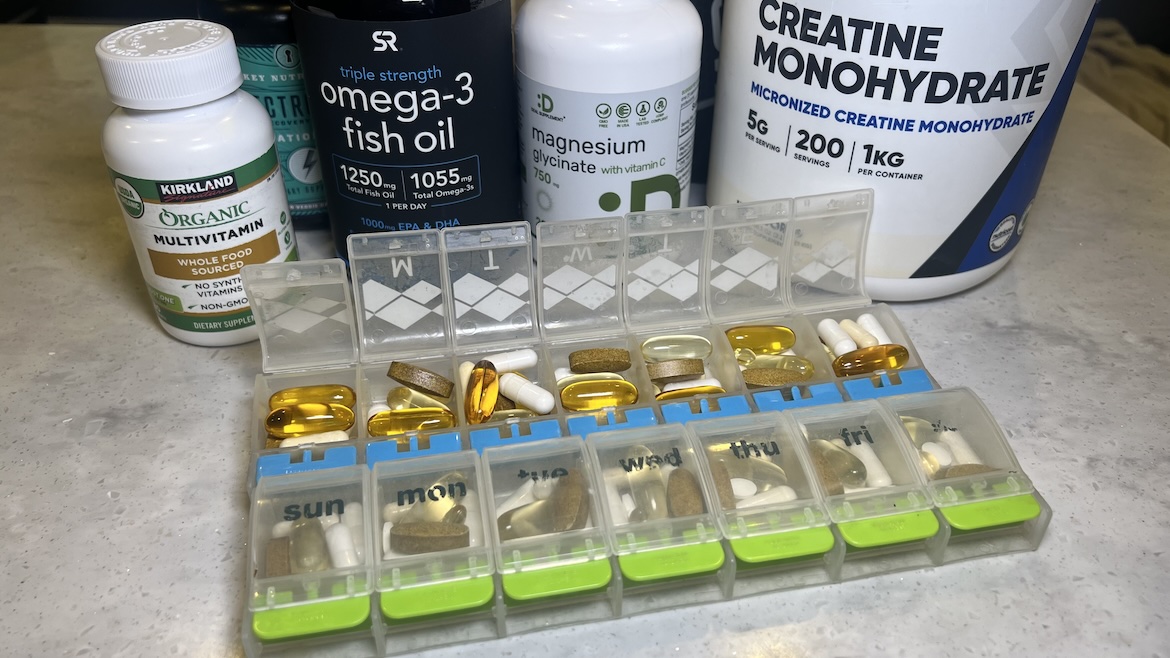
Supplements I Take for Optimal Health
When it comes to your health, consistent, balanced nutrition and an active lifestyle come first and are absolutely critical. Supplements can only complement that, and can never replace that. So keep that in mind, and reach out to your healthcare professional or registered dietician to discuss where you may need to supplement.
Multivitamin and Mineral
Getting a complete array of minerals and vitamins is important to improving your metabolic functioning. Multivitamins contain about thirteen vitamins and about 15 minerals that are essential to your health. The specific levels can vary quite a bit by brand because they are not regulated by the Food and Drug Administration (FDA). I take this every morning after breakfast.
Vitamin D
Our bodies synthesize vitamin D from sunlight. Most of us work all day indoors, and therefore, a majority of the population has insufficient levels of this vitamin. Vitamin D is essential for overall health and immune function, and may support muscle function and weight loss. 2,000 to 5,000 IU a day with vitamin K2 is recommended. You may get enough vitamins and minerals from a quality multivitamin, but additional supplementation may be beneficial. I take this every morning after breakfast.
Omega-3 Fatty Acids
Omega-3 fatty acids are critical for supporting heart health, brain function, and mood, preventing diabetes, regulating metabolism, and preventing inflammation. You can find omega-3s in healthy sources like fish and nuts. Most of us get plenty of Omega-6 & 9, but lack Omega-3. Fish oils are an excellent source of essential fatty acids EPA and DHA. Try to target 1-3 grams of DHA/EPA per day. I take this every morning after breakfast.
Magnesium Glycinate
Magnesium aids in muscle function and may support insulin sensitivity. There are so many different forms of magnesium out there; it’s important to pay attention to the different varieties. Some forms, such as oxide and citrate, may cause intestinal discomfort. I prefer magnesium glycinate because it has good bioavailability, promotes muscle relaxation and healthy sleep, is easily absorbed, has no laxative effects, and is very safe. 200 to 600 mg a day is a good number to target. I take this every night before bed.
Protein Powder
Protein powder is an excellent tool to help you reach your target protein for the day. I always prefer to eat real animal protein at every meal. However, sometimes a shake is a perfect alternative for when you are in a hurry, aren’t prepped ahead, or just want something different. 100% Whey Protein Isolate powders have the best bioavailable amino acids, so try to pick out a high-quality whey isolate. You will want 10-14 g of EAAs and 1-4 g of leucine to trigger muscle protein synthesis. So, whether you go plant-based or whey-based, try to find a brand that lists the amino acid profile (usually a blend of plant sources). Try to target 30-50 grams of protein per meal, and/or roughly one gram of protein per pound of ideal body weight in pounds. I take this only as needed.
Creatine Monohydrate
You can naturally get a good amount of creatine in your diet by eating a lot of meat and fish. Even though I do eat a lot of meat, I still choose to supplement with creatine to enhance lean muscle mass, strength, and power, and for the potential brain health benefits. Choose a clean brand of creatine monohydrate that has nothing else listed in the ingredients, and take 5 grams per day. I take this every morning after breakfast, mixed with water.
The time of day that you take creatine does not matter. What does matter is that you take it consistently every single day. Daily doses are required in order to saturate muscles and keep them saturated. Use a food scale to measure out your grams, and drink plenty of water throughout the day. Start with 3-5 grams as you start out, and you can slowly work your way up to 5-10+ grams with time.
Electrolyte Tabs
Sodium or salt has been linked to hypertension, but only in a subset of genetically salt-sensitive people. Sodium is important for overall health, but our sodium levels need to be in proportion to our levels of other important minerals, mainly potassium. When the sodium-to-potassium ratio gets out of whack, it can lead to high blood pressure. The trick isn’t to eliminate salt, but rather, to avoid the refined salts in processed foods as well as iodized salt. Electrolyte tabs replace sodium losses through sweat, balance diets lacking in sodium (whole food diets), and boost diets lacking in potassium. I take electrolyte tabs when I’m in climates that are hot/humid, when I am sweating a lot, or if on long/strenuous runs/hikes.
There are plenty of other supplements that may be beneficial to you. This is just a short list of the few that I personally believe in, and take myself. It’s always best to consult with your doctor for your unique needs.


Dont be shy, share your thoughts.